
The AI debate is getting loud and ugly
A father, a family dinner table, and the uncomfortable line between useful AI tools, exploited creative work, and human judgment.

A father, a family dinner table, and the uncomfortable line between useful AI tools, exploited creative work, and human judgment.

AI-assisted writing is already normal in resumes, LinkedIn profiles, email, and workplace tools. The real issue is not AI use, but honesty, taste, and responsibility.

AI trust is shaped by the whole operating system around a product: data, incentives, labor, governance, accountability, and human control.

People can value AI while distrusting its deployment. The real questions are who directs the tool, who benefits, and what systems prevent or correct harm.

Software teams are shipping faster with AI, but faster output only becomes business value when testing, review, and operational discipline are already in place.

Companies often mistake visible AI activity for strategy. Here is how competitive panic distorts spending, sequencing, governance, and real business leverage.

A thought-leadership article on the difference between using AI to automate existing output and using it to create new business value, capability, and leverage.

Sustainable AI starts with workflow design, ownership, review points, and human judgment before any tool enters the process.
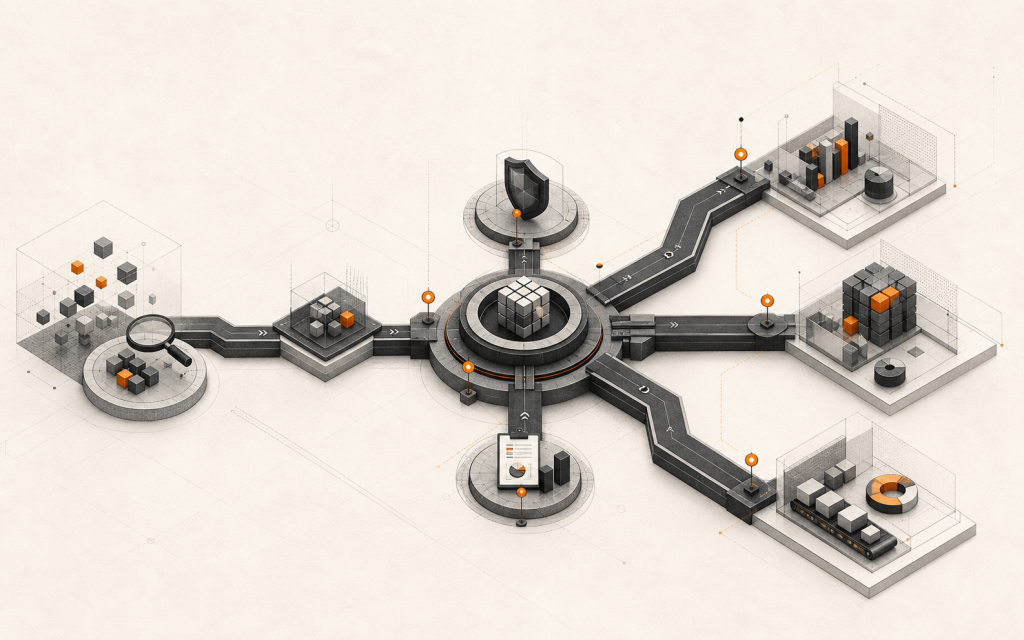
Scalable AI operations turn opportunity discovery, pilots, governance, and measurement into a repeatable business capability.

AI-enabled digital systems need clear human control, governance, and workflow design so automation supports judgment instead of replacing it blindly.