AI automation is useful when it removes friction from a workflow that already matters. It becomes expensive noise when it is added before the team understands the work.
I believe in AI as a practical tool. It can help people move faster, organize information, draft better first versions, classify requests, summarize meetings, prepare handoffs, and turn ideas into working systems. But AI is not a substitute for method. If anything, it makes method more important.
AI should enter through a real door
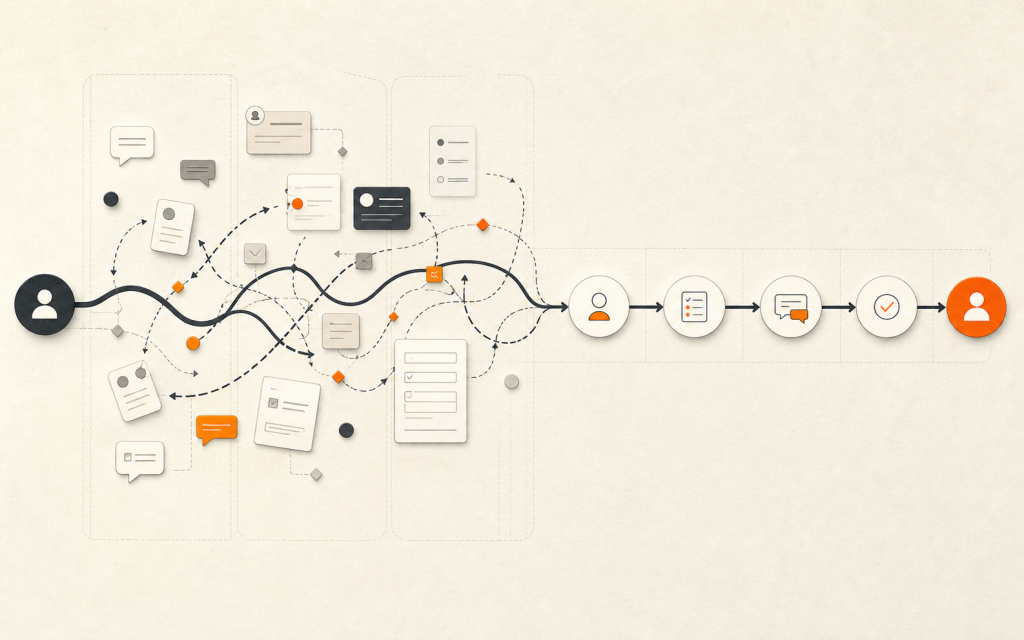
AI automation often enters a company through a side window: someone sees a demo, someone else forwards a thread, and suddenly there is pressure to automate a process nobody has properly described. That is how teams end up with a shiny tool standing in the hallway asking where the meeting is.
A better entrance is a real workflow. Start where the business already feels the pain and where people can describe the current process without pretending it is elegant. Intake, review, summarization, routing, proposal support, knowledge search, and reporting are useful because they already have friction. AI does not need to invent the value. It needs to reduce the drag.
Practical nugget: If nobody can explain how the task is done manually, the team is not ready to automate it intelligently.
Start where the workflow is already painful
The best first AI automation use cases are usually close to existing pain: repetitive intake, document review, internal summaries, lead qualification, proposal support, status updates, content repurposing, knowledge retrieval, or routing requests to the right person.
Do not start with the most impressive demo. Start with the place where people are already losing time and where the output can be checked.
Practical nugget: Automate the repeatable part of the workflow, not the responsibility for the outcome.
This is why AI automation connects directly with Absolutmedia’s AI services. The work is not only about prompts or tools. It is about making the business process more capable.
Human control is a design requirement
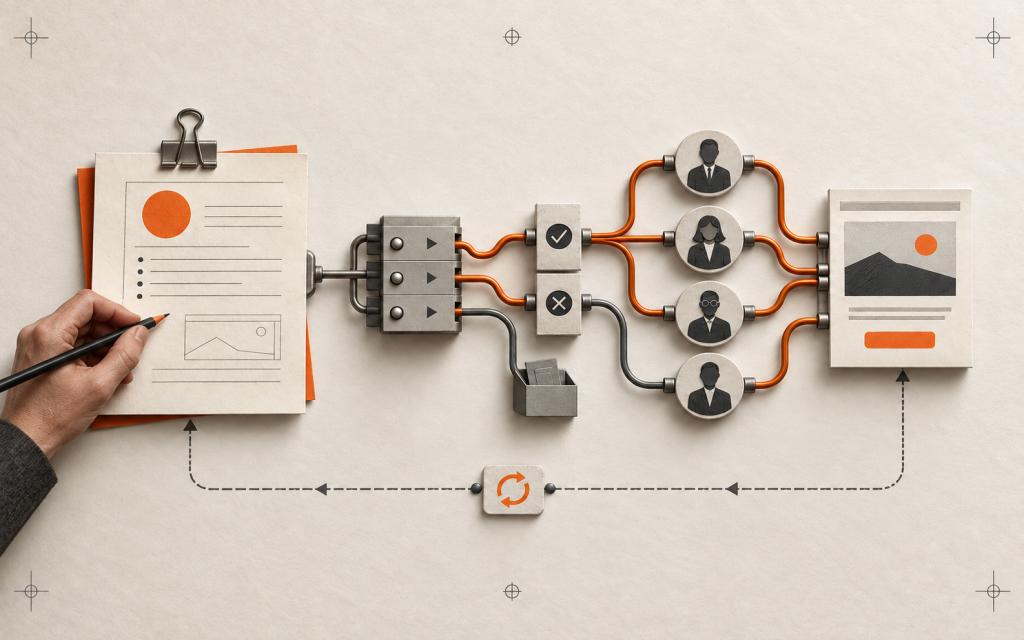
For many business workflows, the right goal is not full autonomy. The right goal is better leverage. AI can prepare, suggest, summarize, detect, and organize. A human still reviews, decides, approves, or handles the exception.
The NIST AI Risk Management Framework is useful because it frames AI around governance, measurement, and risk management. That is the mature conversation. Not “Can we automate this?” but “How do we make this useful, accountable, and safe enough for the workflow?”
The adoption curve is real, but so is the cleanup
The Stanford HAI 2025 AI Index Report shows how quickly AI adoption and investment have accelerated. That momentum matters because clients are not imagining the pressure; AI is genuinely moving into everyday work.
But fast adoption creates a second job: cleanup. Teams need to decide which automations are useful, which are risky, which are creating new review burdens, and which are quietly producing more noise than value. The exciting part is speed. The mature part is curation.
The OECD AI Principles are helpful because they keep the conversation centered on trustworthy, human-centered use. That may sound far away from a small workflow automation, but it is not. If the automation affects clients, employees, decisions, or data, trust is part of the product.
Overbuilding is the quiet risk
AI tools make it easy to build a prototype that looks smarter than the system really is. A chatbot appears. A workflow runs. A dashboard updates. Everyone gets excited. Then the edge cases arrive.
Before expanding automation, define the inputs, expected outputs, review points, failure cases, and ownership. If nobody owns the quality of the output, the automation is not complete.
Google’s AI principles are another useful reference point because they emphasize social benefit, safety, accountability, and avoiding harmful applications. Even small business automations benefit from that mindset.
A useful first build
A strong first AI automation project might connect a form intake to a structured summary, categorize the request, suggest next steps, and notify the right team member. It may not replace anyone’s work. It simply gives the team a cleaner starting point.
That is enough. If it saves time, improves consistency, and gives people better context, the automation is already producing value.
Related internal reading: How to Build an AI-Enabled Digital System Without Losing Human Control and AI Consulting for Enterprise Teams.
How Absolutmedia approaches it
We start by mapping the workflow, identifying the repetitive decision points, and defining where AI can support the team without hiding responsibility. Then we design the automation with review, measurement, and a path to improve it after real use.
Next step
If you have a workflow that feels slow but important, do not begin with a tool list. Begin by documenting where the work gets stuck. Then use Absolutmedia’s AI services to shape the first automation around a real business use case.