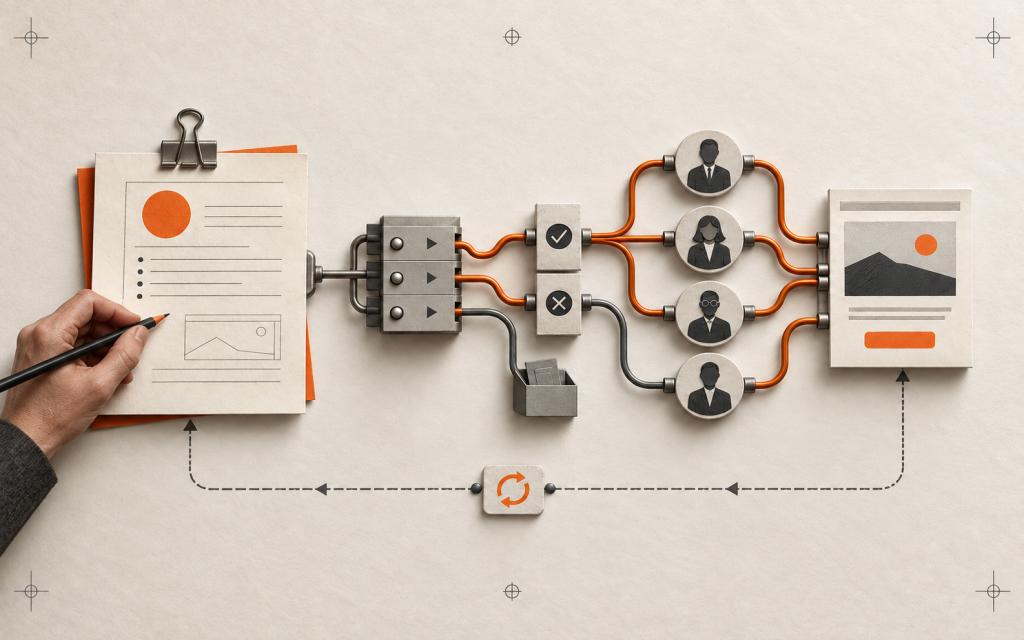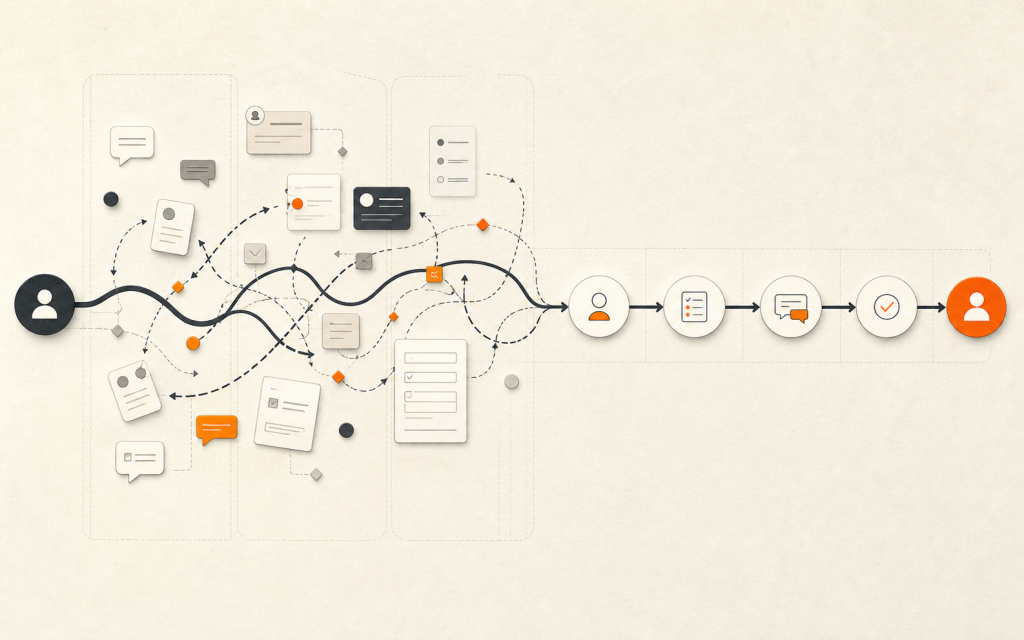
People use AI to summarize documents, improve emails, search for information, organize ideas, edit images, write code, and avoid staring at a blank page for forty-five minutes while pretending to think strategically.
They also say they are worried about it.
This is often presented as a contradiction. If people use AI, surely they trust it. If they distrust it, why do they keep using it?
The argument can be stated plainly: AI is “a hammer,” and the real question is who is using it, who benefits, and what systems allow the harm.
That framing changes the trust conversation.
A hammer on a workbench is a tool. Put it in someone's hand, give that person authority over the work, and the tool is no longer the only thing being evaluated. You start looking at the person holding it, what they intend to build, who asked them to build it, and whether anyone will stop them from putting a nail through the plumbing or try to unscrew some fastener with it.
AI works the same way.
People can value the capability while distrusting the deployment. They can use AI voluntarily for their own work while questioning how an organization uses it to make decisions about them. They can appreciate the hammer and still want to know why someone is swinging it near a load-bearing wall.
Adoption tells you that people found a use. Trust tells you whether they believe the tool is in responsible hands.
The trust gap is not a knowledge gap
Businesses often assume skepticism will disappear after more education.
Explain how the model works. Show a few demonstrations. Add a training session with a title such as "Unlocking the Future of Intelligent Productivity." Provide sandwiches. Trust will emerge around slide 37.
Training is necessary, but this theory misunderstands the concern.
Understanding how a model works does not answer who selected the project, who benefits from it, or who repairs the damage when the deployment goes wrong.
Pew Research Center found that 62% of U.S. adults said they interacted with AI at least several times a week in 2025. Among adults under 30, one-third said they interacted with it several times a day. The same research found that 57% of adults believed they had little or no control over whether AI was used in their lives, and 61% wanted more control. Pew Research Center, AI in Americans' Lives
That is not simple rejection. It is use combined with limited agency.
The younger audience makes the tension clearer. They are more exposed to AI and more familiar with it, yet majorities of adults under 30 told Pew they expected increased AI use to make people worse at thinking creatively and forming meaningful relationships. Pew Research Center, How Americans View AI
The people closest to a technology are not always its most obedient fans. Sometimes they are simply the first to understand where it is useful and where it becomes intrusive.
So the practical question is not, "How do we convince people to trust AI?"
It is, "What would make this particular use of AI worthy of trust?"
Holding the tool feels different from being subject to it
When someone chooses to use an AI assistant for a first draft, they control the purpose, timing, input, and decision to accept or reject the output.
They are holding the tool.
When an organization introduces AI to score performance, screen requests, monitor activity, answer customers, restructure work, or make recommendations nobody can clearly challenge, the relationship changes.
Now someone else is holding it.
The system is no longer merely useful. It has authority, and people judge authority differently from convenience.
They want to know:
-
Who decided AI should be used here?
-
What information does the system use?
-
What does it influence, recommend, or decide?
-
Who benefits if it succeeds?
-
Who carries the cost if it fails?
-
Can an affected person question the result?
-
Is a human still accountable?
An organization may answer none of these questions and still achieve high usage by making the tool mandatory or embedding it into an existing workflow.
That is not trust. That is distribution.
Practical nugget: Measure AI adoption and AI trust separately. Usage shows access and utility. Trust requires evidence that purpose, authority, benefit, control, and accountability have been designed rather than assumed.
The tool did not choose the objective
AI is frequently blamed for decisions it did not make.
The model did not decide which workflow to automate. It did not choose the success metric. It did not determine that speed mattered more than quality, that cost reduction mattered more than service, or that nobody needed a practical correction path.
People made those decisions.
The organization supplied the objective, data, permissions, incentives, interface, and operating boundaries. AI carried capability into that system. It did not create the system around itself.
This distinction does not excuse weak technology. Models can produce inaccurate outputs. Systems can behave unpredictably. Integrations can fail. An unreliable tool is still unreliable.
But replacing the tool will not fix a deployment shaped by the same incentives and governed by the same missing ownership. The new model may be more capable. It will still be pointed by the organization.
When an AI initiative causes harm or loses trust, the diagnosis should separate several questions:
-
Did the technology fail to perform the task?
-
Did the organization choose the wrong task?
-
Did weak data or context distort the result?
-
Did the workflow give the system too much authority?
-
Did incentives reward the wrong outcome?
-
Did nobody own monitoring, escalation, or correction?
Calling all of this "an AI problem" feels satisfyingly modern. It is also vague enough to protect almost every human decision that produced the result.
Forced adoption creates compliance, not confidence
Many AI rollouts begin with a leadership announcement, tool access, a deadline, and a general instruction to "find use cases."
Employees are handed the new system and told the company is now transforming.
What is being built remains slightly mysterious.
People are not necessarily afraid of learning the tool. They may be trying to understand the organization's intent.
Is AI being introduced to remove repetitive work, improve access to knowledge, and expand what the team can produce? Or is it being introduced to support an optimistic spreadsheet assumption about doing more with fewer people?
Both may be described as productivity. Only one feels like support.
The International Labour Organization found that one in four workers globally are in occupations with some exposure to generative AI, while emphasizing that transformation is more likely than complete replacement because human input remains necessary in most occupations. International Labour Organization, Generative AI and Jobs
That makes implementation a work-design question. Teams need to know which tasks are changing, which skills become more valuable, how quality will be reviewed, and where human judgment remains decisive.
A license and a webinar do not answer those questions. They create an account.
Trust grows when people can see that the tool is being used to improve real work and that the benefits are not reserved entirely for the organization while the risks are distributed to everyone else.
Trust is built by involving the people closest to the work
The people doing the work usually know where the process breaks.
They know which requests arrive incomplete, which knowledge is outdated, which exceptions matter, which customer situations require tact, and which supposedly repetitive task contains fifteen years of judgment hidden inside it.
They also know where the walls are.
If those people are excluded from AI design, the organization loses the knowledge required to make the system useful. It also sends a clear message: adoption is expected, but participation is optional.
That is a poor foundation for trust.
Bring affected people into the process early enough to influence it. Ask them to map real work, identify failure cases, test outputs, define acceptable quality, and help determine where human review belongs.
Participation does not mean every decision becomes a referendum. It means the design includes the people who understand the consequences.
Microsoft's 2026 Work Trend Index found that organizational factors such as culture, manager support, and talent practices accounted for 67% of reported AI impact, compared with 32% for individual factors such as mindset and behavior. The research supports a practical lesson: organizations cannot outsource adoption to employee enthusiasm. They have to create the conditions in which useful adoption can happen. Microsoft, 2026 Work Trend Index
If employees resist a system that arrived without a clear purpose, meaningful input, or a correction path, the diagnosis should not automatically be "change resistance." Sometimes the resistance is the first functioning quality-control mechanism in the project.
Transparency should reveal the project, not just the tool
Organizations frequently respond to trust concerns with disclosure.
"This response was generated with AI."
Useful to know. Not sufficient.
Labeling the tool does not explain what is being built.
A disclosure does not tell someone whether the answer is reliable, what information shaped it, what the system is allowed to do, who gains from the automation, or how to correct a bad result. Transparency becomes meaningful when it helps someone understand the deployment and act on that understanding.
Useful transparency explains:
-
The system's purpose
-
The role AI plays in the outcome
-
Who authorized its use
-
Important limitations or uncertainty
-
What information the user can verify
-
What control remains with the person
-
How to reach someone empowered to intervene
This is especially important when the system affects customers. A chatbot that identifies itself but traps a customer in an endless loop is transparent in the same way a locked door with a glass panel is transparent. You can see the problem beautifully.
NIST's AI Risk Management Framework places governance, context, measurement, and active management around the complete AI lifecycle. That broader view matters because trust cannot be added entirely at the interface. It is produced by decisions about authority, data, monitoring, human oversight, and response when something goes wrong. NIST AI Risk Management Framework
The interface communicates trust. The operating system behind it earns trust.
What systems allow the harm?
The most important part of the analogy is not the tool itself.
It is the system that permits the swing.
An organization may publish responsible AI principles while rewarding teams only for speed, volume, adoption, and cost reduction. It may require human review without giving reviewers enough time or authority to challenge the output. It may collect feedback without assigning anyone to act on it. It may call a process transparent because a label appears in the corner of the screen.
The stated policy says one thing, the operating system rewards another. That gap is where avoidable harm becomes routine.
Systems that allow harm often contain familiar weaknesses:
-
Success metrics that ignore quality or downstream cost
-
Authority without named accountability
-
Human review designed as theater rather than control
-
Affected people excluded from design and testing
-
Failures that cannot be observed or categorized
-
Escalation paths without anyone empowered to intervene
-
Incentives that reward deployment but not correction
None of these weaknesses is inevitable. They are design decisions, even when they appear through neglect.
Organizations build trust by replacing reassurance with operating evidence: approved and prohibited uses, visible review points, source references where accuracy matters, correction paths, named owners, quality reporting, and examples of feedback changing the system.
These practices are less exciting than announcing an AI-first future. They are also what keep the future from requiring emergency repairs.
Three questions every AI rollout must answer
Before asking employees or customers to trust an AI-enabled workflow, an organization should answer three questions in plain language.
1. Who is using the tool, and with what authority?
Name the person, team, or system directing the AI. Define what it may assist, recommend, generate, or execute. Make the boundaries visible.
"AI is involved" is not enough. A calculator and a decision-maker can both be involved in a financial process. Their authority is not remotely the same.
2. Who benefits from the deployment?
Identify the practical value for the organization and for the people affected.
Does the system remove repetitive work, improve access to information, shorten waiting, increase quality, or expand creative and technical capability? Or does the measurable benefit exist only in a cost-reduction target?
Benefits do not have to be equal in every direction. They do have to be honestly understood.
3. What prevents harm, and who corrects it?
Name the controls, reviewer, monitoring method, escalation path, and person with authority to repair a bad outcome.
"The model made a mistake" explains the mechanism. It does not explain why the system allowed the mistake to matter.
When these answers are clear, people can evaluate a real implementation instead of trying to interpret a cloud of transformation language.
How Absolutmedia approaches it
At Absolutmedia, we treat AI as a capable tool inside a designed business system.
Our AI consulting work begins by clarifying the business purpose, the people affected, the workflow being changed, the data involved, and the authority the system will receive. Our digital systems approach connects those decisions to UX, content, automation, review, and day-to-day operations.
We ask who is directing the capability, where the value goes, what human judgment must remain, and which controls keep a weak output from becoming a consequential outcome.
We want AI to help people make real work possible: faster production, better access to knowledge, stronger decisions, and capabilities that would otherwise require more time, staff, or technical skill. That value depends on curation, method, and human control.
The objective is not to make everyone trust AI on command. It is to build a system in which the purpose is clear, the person directing it is accountable, and the people affected are not treated as acceptable collateral.
Next step
Choose one AI system your employees or customers are expected to use.
Ask three questions: Who is using it and with what authority? Who receives the benefit? What prevents or corrects harm?
Then ask a small group of affected people to answer those questions independently.
Compare their answers with the project team's answers. The gaps are your trust backlog.
Fix those gaps through workflow design, clearer boundaries, meaningful participation, visible controls, and accountable operations. Then communicate what changed.
AI is a hammer. That does not make it harmless, and it does not make it guilty.
The useful work begins when we stop arguing with the tool long enough to examine the hand, the blueprint, the incentives, and the system that decides what happens after the swing.
For related thinking, read How to Build an AI-Enabled Digital System Without Losing Human Control and Sustainable AI Starts Before the Tool.